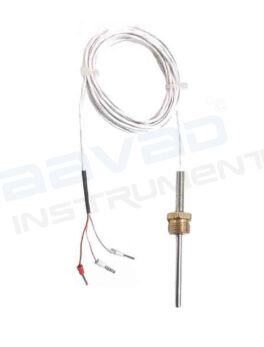
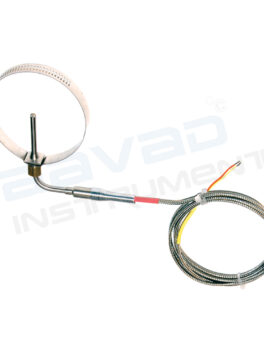
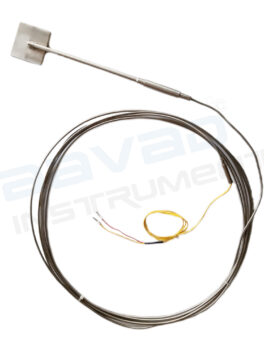
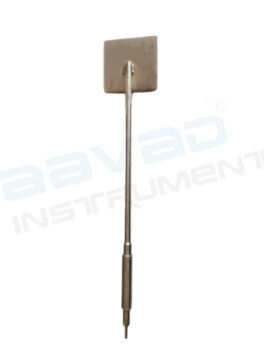
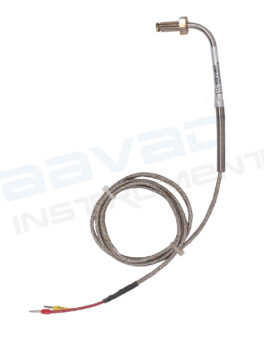
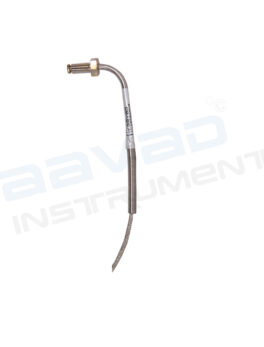
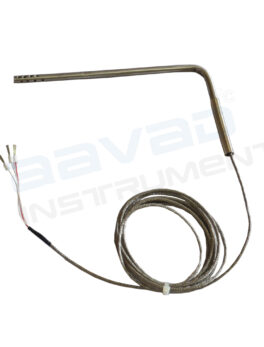
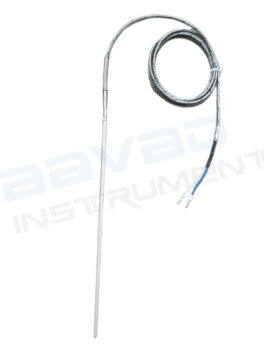
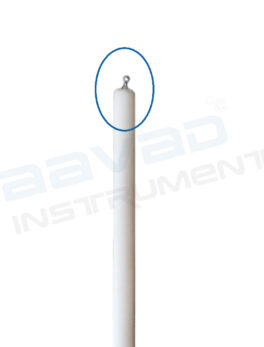
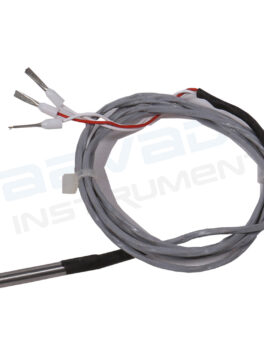
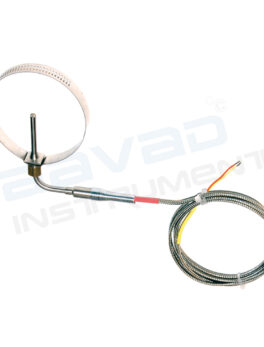
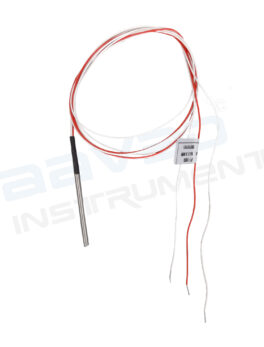
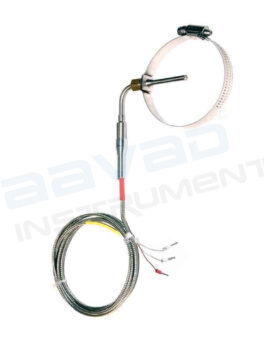
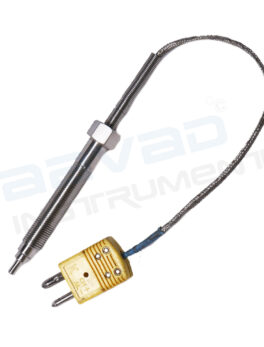
RTD sensors are used to measure temperature by changing resistance proportional to the temperature. RTD’s are designed with basic temperature elements as well as fully packaged assemblies. These so called RTD probes consist of a RTD sensor element, a sheath or housing, an epoxy or filler, extension leads and sometimes a connector or termination. Various sensor materials are available based on customer requirements for material compatibility, accuracy, and measurement range. Standard packages as well as custom designs allow for the flexibility to design the most suitable RTD temperature sensors for a variety of applications.
Key Features
High accuracy and excellent repeatability
Predictable and stable resistance–temperature relationship
Available as bare elements or complete probe assemblies
Typical probe construction includes:
RTD sensing element
Protective sheath or housing
Epoxy or mineral filler
Extension leads
Optional connector or termination
Multiple sensor materials available for compatibility with process media
Wide temperature measurement range options
Standard designs as well as custom-built solutions
Flexible configurations to meet specific application needs
Long service life with minimal drift
Applications
Industrial process temperature measurement and control
Chemical, petrochemical, and oil & gas industries
Power generation and energy systems
HVAC and building automation
Food, beverage, and pharmaceutical processing
Plastic processing and manufacturing machinery
Motors, bearings, and rotating equipment monitoring