Heat Treatment Furnace Thermocouples:
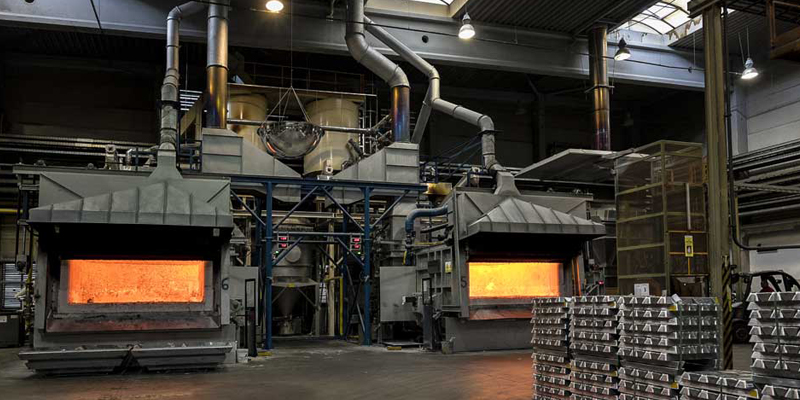
Heat treatment furnaces are the backbone of metallurgical industries such as steel, copper, and aluminium plants. These furnaces operate at extremely high temperatures where precise temperature control is crucial to ensure product quality, mechanical strength, and metallurgical properties. To achieve this accuracy, thermocouples play a vital role as reliable temperature-sensing instruments.
Among various types, K Type, R Type, S Type, and B Type thermocouples with ceramic protection tubes are the most widely used in high-temperature furnaces.
Importance of Thermocouples in Heat Treatment Furnaces
Temperature Accuracy: Ensures uniform heating for stress relieving, annealing, hardening, tempering, and solution treatment.
Energy Efficiency: Prevents overheating, reduces fuel/electricity consumption.
Product Quality: Controls microstructure of metals for improved strength and durability.
Safety: Monitors furnace conditions and prevents overheating or damage.
Types of Thermocouples Used in Furnaces
🔹 K Type Thermocouple (Nickel-Chromium / Nickel-Alumel)
Temperature Range: 0°C to 1200°C
Applications: Commonly used in aluminium and copper furnaces.
Advantages:
Cost-effective and widely available
Good sensitivity and fast response
Suitable for oxidizing environments
🔹 R Type Thermocouple (Platinum-13% Rhodium / Platinum)
Temperature Range: 0°C to 1600°C
Applications: Steel and non-ferrous furnaces where high accuracy is needed.
Advantages:
Stable and accurate at high temperatures
Long service life in harsh furnace conditions
High resistance to corrosion and oxidation
🔹 S Type Thermocouple (Platinum-10% Rhodium / Platinum)
Temperature Range: 0°C to 1600°C
Applications: Heat treatment of stainless steel, special alloys, and high-purity copper.
Advantages:
Highly accurate and reliable in continuous operation
Widely accepted as a standard for furnace calibration
Suitable for both oxidizing and inert atmospheres
🔹 B Type Thermocouple (Platinum-30% Rhodium / Platinum-6% Rhodium)
Temperature Range: 600°C to 1700°C
Applications: Extreme high-temperature steel furnaces, glass melting, and foundries.
Advantages:
Can withstand temperatures above 1600°C
Very stable output signal at high heat
Excellent for long-term high-temperature exposure
Role of Ceramic Protection Tubes
Thermocouples used in furnaces are often housed in ceramic protection tubes made of alumina or recrystallized alumina. These tubes:
Protect thermocouples from direct flame and corrosive gases
Extend sensor life in harsh furnace conditions
Provide insulation against electrical interference
Ensure reliable performance even at extreme heat
Applications in Different Industries
- Steel Plants → Monitoring annealing, carburizing, forging, and hardening processes
- Copper Plants → Controlling melting and refining furnaces
- Aluminium Plants → Heat treatment in rolling, extrusion, and casting lines
- Glass Industry → Temperature monitoring in melting tanks, kilns, ladles
- Foundries → Used in core baking ovens, induction furnaces, reheat furnaces
Why Choose Aavad Ceramic Thermocouples?
Wide range: K, R, S, B Type thermocouples
High-quality ceramic protection tubes for durability
Accurate, stable, and long-lasting performance
Custom designs available for furnace applications
Trusted by steel, copper, aluminium, and glass industries
✅ Conclusion:
For any steel, copper, or aluminium plant, reliable K Type, R Type, S Type, and B Type ceramic thermocouples are essential for accurate furnace temperature monitoring. They not only ensure product quality and safety but also improve process efficiency and cost savings in industrial heat treatment applications.